

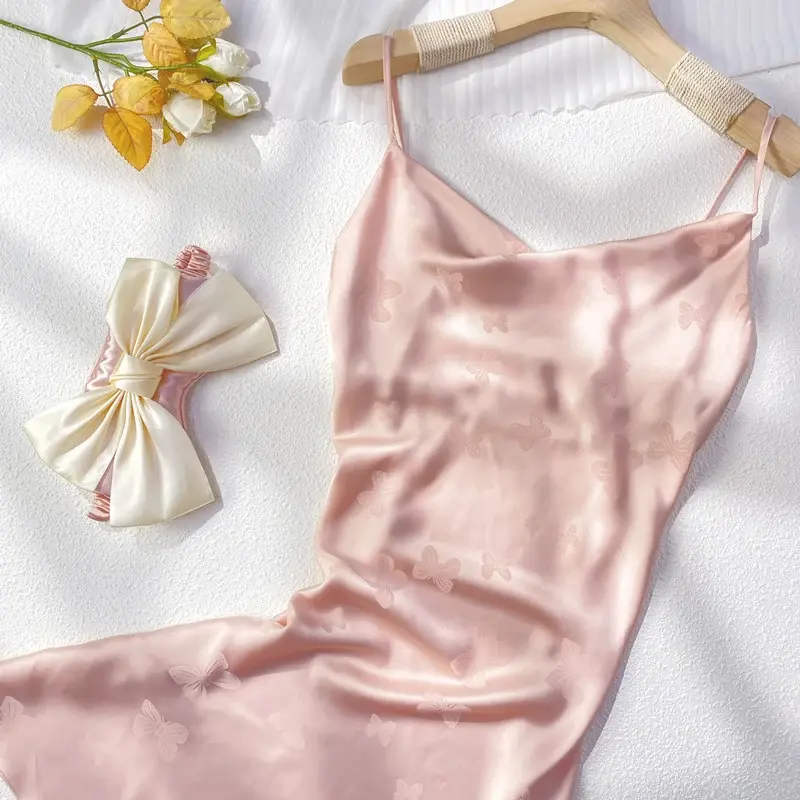
ALT: Close-up of ice-silk fabric sleepwear showing smooth cooling texture for hot sleepers
What Exactly Is Ice-Silk Fabric — and Why Is Everyone Talking About It?
Key Conclusion: Ice-silk fabric is a category of engineered textile — most commonly made from nylon, polyester, or blended fibers treated with moisture-wicking and heat-dissipating technologies — that mimics the cooling sensation of natural silk at a fraction of the cost. For sleepers who wake up overheated, sweat through their sheets, or live in warm, humid climates, ice-silk products represent a practical and increasingly well-understood solution. This article breaks down what ice-silk actually is at a material level, how it works physiologically, and what you should watch out for when choosing it.
If you've been browsing sleepwear or pillowcases recently, you've almost certainly encountered the term "ice-silk." It shows up everywhere — on product pages, in bedding reviews, across wellness communities. But the enthusiasm has outpaced the explanation, and a lot of shoppers are making purchasing decisions without truly understanding what they're buying. That gap between hype and clarity is exactly where we at SleepBetterMD feel most useful.
The Rise of Cooling Fabrics: How Ice-Silk Entered the Sleep Conversation
Ice-silk fabric is not a single, standardized fiber — it is a broad commercial descriptor applied to textiles engineered specifically to feel cool against the skin, wick moisture efficiently, and dry quickly. The category emerged from Asia's performance textile industry, where high humidity and warm climates created a strong consumer demand for alternatives to traditional cotton and linen that retained heat and stayed damp when wet.
The term "ice-silk" (冰絲 in Chinese) became a marketing anchor for a cluster of materials — primarily nylon, polyester, and fiber blends such as nylon-spandex and polyester-viscose — that had been engineered or chemically treated to achieve thermal conductivity, moisture management, and surface smoothness simultaneously. The name borrows the aspirational association of natural silk's lightness and sheen, but it is important to be transparent: most ice-silk products contain no silk whatsoever. They are synthetics or semi-synthetics designed to produce a cool-to-touch sensation that silk alone does not consistently deliver.
From an industry perspective, this category has expanded significantly over the past decade. Asian manufacturers — particularly those specializing in performance apparel and home textiles — invested heavily in yarn engineering and finishing technologies that could deliver measurable cooling effects. The result was a diverse range of fabrics marketed under the ice-silk umbrella, from lightweight sleepwear and pillowcases to sheet sets and eye masks. At SleepBetterMD, we source from more than 20 Asian manufacturers, and cooling fabric technology is one of the most actively innovated categories we evaluate.
Global interest in sleep quality has grown in parallel. According to the American Academy of Sleep Medicine, sleep disorders and poor sleep quality affect a substantial portion of the adult population globally, and bedroom temperature is consistently identified as one of the primary environmental factors disrupting sleep. As awareness of sleep hygiene has expanded, so has demand for products that address the thermal side of the sleep environment. Ice-silk entered the mainstream Western market largely through this wellness lens — not as a fashion textile, but as a functional tool for better rest.
The challenge, however, is that "ice-silk" remains an unregulated marketing term. There is no international standard body that defines what composition or performance threshold a fabric must meet to be labeled ice-silk. This creates real risk for consumers: products marketed identically may vary dramatically in material composition, actual cooling performance, durability, and safety. That is why material transparency is not optional for us — it is the foundation of how we select and present every product.
How Ice-Silk Fabric Actually Works: The Cooling Mechanism Explained
Ice-silk fabric produces its characteristic cool-to-touch sensation through a combination of thermal conductivity, moisture management, and surface engineering. Understanding each mechanism separately helps explain why quality differences matter enormously.
Thermal Conductivity: The "Cold Touch" Effect
The most immediate and recognizable property of ice-silk is its instant cool sensation when it contacts skin. This effect is driven by thermal conductivity — the rate at which a material transfers heat away from a heat source (your body) into its surroundings. Materials with higher thermal conductivity feel cooler at initial contact because they pull warmth away from the skin more rapidly.
Engineered fibers used in ice-silk fabrics are selected and constructed specifically to maximize this property. Tightly woven, smooth-filament synthetic yarns conduct heat more efficiently than the loosely structured staple fibers in conventional cotton. The sensation is real and measurable — it is not a marketing fiction. The key variable, though, is how long the cooling effect persists. Lower-quality ice-silk fabrics may produce a strong initial cold sensation that fades quickly once the fabric warms up against the body. Better-quality products maintain thermal regulation more consistently through the night.
Moisture Wicking and Quick-Dry Performance
Moisture wicking is the second pillar of ice-silk's sleep benefit. Engineered cooling fabrics are designed to transport perspiration away from the skin surface and spread it across the outer face of the fabric, where it evaporates rather than pooling against the body. This matters enormously for sleep: a humid microclimate between skin and fabric raises the body's perceived temperature and disrupts the natural core temperature decline that supports deep sleep.
The wicking mechanism depends on fiber geometry and surface treatment. Microfiber constructions, for example, create capillary channels between individual filaments that draw moisture outward passively. Some ice-silk products also incorporate chemical finishing treatments that enhance hydrophilicity on the outer layer while maintaining a smooth, non-absorbent inner surface against the skin. The result is a dry-feel experience even when the body is actively perspiring — a meaningful functional difference from cotton, which absorbs moisture and retains it.
Surface Smoothness and Low-Friction Touch
The third mechanism is largely tactile but has genuine physiological implications. Ice-silk fabrics are characteristically smooth and low-friction, which means less mechanical irritation to the skin during movement in sleep. Dermatological research has noted that high-friction textiles can increase transepidermal water loss and exacerbate conditions like atopic dermatitis, particularly in warm-weather conditions. The smooth filament structure of quality ice-silk reduces this risk, which is why we see strong interest in this fabric category from sleepers with sensitive skin.
The Role of Fiber Composition
Not all ice-silk performs equally because not all ice-silk is made the same way. The cooling and moisture properties of a fabric depend fundamentally on its fiber content and construction:
- Nylon-based ice-silk tends to deliver superior strength, abrasion resistance, and a refined drape, but may retain static charge and can be less breathable in still-air environments.
- Polyester-based variants are generally more affordable and widely available, but lower-grade versions may pill, retain odors, and degrade their wicking properties after repeated washing.
- Nylon-spandex blends add stretch recovery — valuable for close-fit sleepwear — while retaining cooling characteristics.
- Polyester-viscose blends incorporate a semi-synthetic natural fiber (viscose, derived from cellulose) to improve breathability and reduce the synthetic feel, though they may sacrifice some quick-dry performance.
Understanding which base fiber a product uses is the first question every informed buyer should ask — and a key reason SleepBetterMD publishes full material disclosures for every product in our catalog.
Ice-Silk vs. Competing Cooling Fabrics: Evidence and Trade-offs
Ice-silk fabric outperforms traditional cotton for heat and moisture management during sleep, but it is not the only cooling textile option, and it is not universally superior for every sleeper profile. A clear-eyed comparison helps set accurate expectations.
| Fabric Approach | Strengths | Trade-offs | Best Fit |
|---|---|---|---|
| Ice-silk (nylon or polyester blend) | Strong cool-to-touch sensation, fast moisture wicking, quick-dry, durable across washes | No universal standard; quality varies widely; some variants feel synthetic to touch | Hot sleepers in warm/humid climates; travelers; summer bedding |
| Natural silk | Naturally temperature-regulating, luxuriously smooth, hypoallergenic | Expensive, high-maintenance, less moisture-wicking than engineered alternatives, delicate | Sleepers with skin sensitivity; cool-climate luxury bedding |
| Bamboo-derived fabrics (bamboo viscose/lyocell) | Soft, naturally odor-resistant, moderate moisture management, biodegradable | True cooling effect is more moderate than ice-silk; sustainability claims require scrutiny | Eco-conscious sleepers; mild-climate warmth management |
| Cotton percale | Breathable, widely trusted, easy care | Absorbs and retains moisture; warm in humid conditions; no active cooling mechanism | Cool-climate sleepers; those preferring natural fibers |
| Phase-change material (PCM) textiles | Actively buffers temperature fluctuation, highly engineered | Higher cost, less common, effectiveness depends on ambient temperature range | Sleepers with significant night sweats or temperature dysregulation |
A pattern we consistently observe in our product sourcing work is that consumers coming from cotton sheets experience the cooling difference from quality ice-silk as immediately significant. Shoppers transitioning from natural silk, however, often notice a difference in how each fabric manages sustained moisture — engineered cooling fabrics generally outperform even high-grade silk when active perspiration is the primary concern.
The most important cautionary note here: mid-market ice-silk products with ambiguous fiber content labels should be approached with skepticism. Fabrics described vaguely as "100% ice-silk" — as though ice-silk were a discrete fiber — are a red flag. Legitimate manufacturers specify the actual fiber composition (e.g., 88% nylon, 12% spandex) and can provide documentation. According to the U.S. Federal Trade Commission's textile labeling regulations, textile products sold in the United States must declare their actual fiber content — a regulatory standard that applies regardless of what a marketing name suggests.
Durability is another dimension that varies substantially. In our experience evaluating products from Asian manufacturers, ice-silk fabrics with higher nylon content tend to maintain their structural integrity and wicking performance across more wash cycles than lower-grade polyester equivalents. Buying on price alone frequently means replacing products more frequently — and losing the performance properties that made them appealing in the first place.
Where Ice-Silk Is Heading and What It Means for Your Sleep Setup
Ice-silk fabric is evolving from a trending marketing descriptor into a more technically defined product category. Several factors are converging to raise the quality floor across the market and give consumers better tools for evaluating what they buy.
Asian textile manufacturers — who represent the primary production base for ice-silk products globally — are investing in formal testing protocols for cooling performance, including standardized metrics for cold-touch values (sometimes referenced as Q-max in textile science), moisture transmission rates, and wash durability. As these benchmarks become more widely adopted, the gap between high-quality and low-quality ice-silk will become easier to identify objectively. We actively monitor these developments in our sourcing work and expect to see more manufacturers providing transparent test data alongside their products in the near term.
Consumer awareness is also maturing. Shoppers increasingly ask specific questions — about fiber content, certification, and wash-cycle durability — rather than accepting cooling claims at face value. This shift rewards brands that invest in material transparency and penalizes those relying on aspirational labeling without substance behind it. It is a trend we designed SleepBetterMD around: our entire product navigation model is built on problem-first filtering and unambiguous material disclosure, rather than marketing language.
For sleepers practically deciding whether ice-silk belongs in their sleep setup, the implications are straightforward. If you sleep warm, experience night sweats, or live in a climate where summer humidity makes traditional bedding uncomfortable, quality ice-silk products — sleepwear, pillowcases, or sheet sets from manufacturers who disclose their fiber content and construction — offer a genuine, evidence-supported improvement over standard options. If your primary sleep challenge is unrelated to temperature, the benefit will be less pronounced.
Key actionable guidance from our sourcing experience:
- Always verify fiber content before purchasing — demand the actual composition, not just the marketing name.
- Prioritize manufacturers who specify nylon or quality polyester blends over vague "ice-silk fiber" labeling.
- Check wash-care instructions: products requiring gentle cycle or line-dry only often use lower-grade constructions that degrade quickly under normal laundry conditions.
- Consider your specific sleep context: light ice-silk sleepwear behaves differently from a full ice-silk sheet set, and the best choice depends on whether your heat problem is contact-based, whole-body, or environmental.
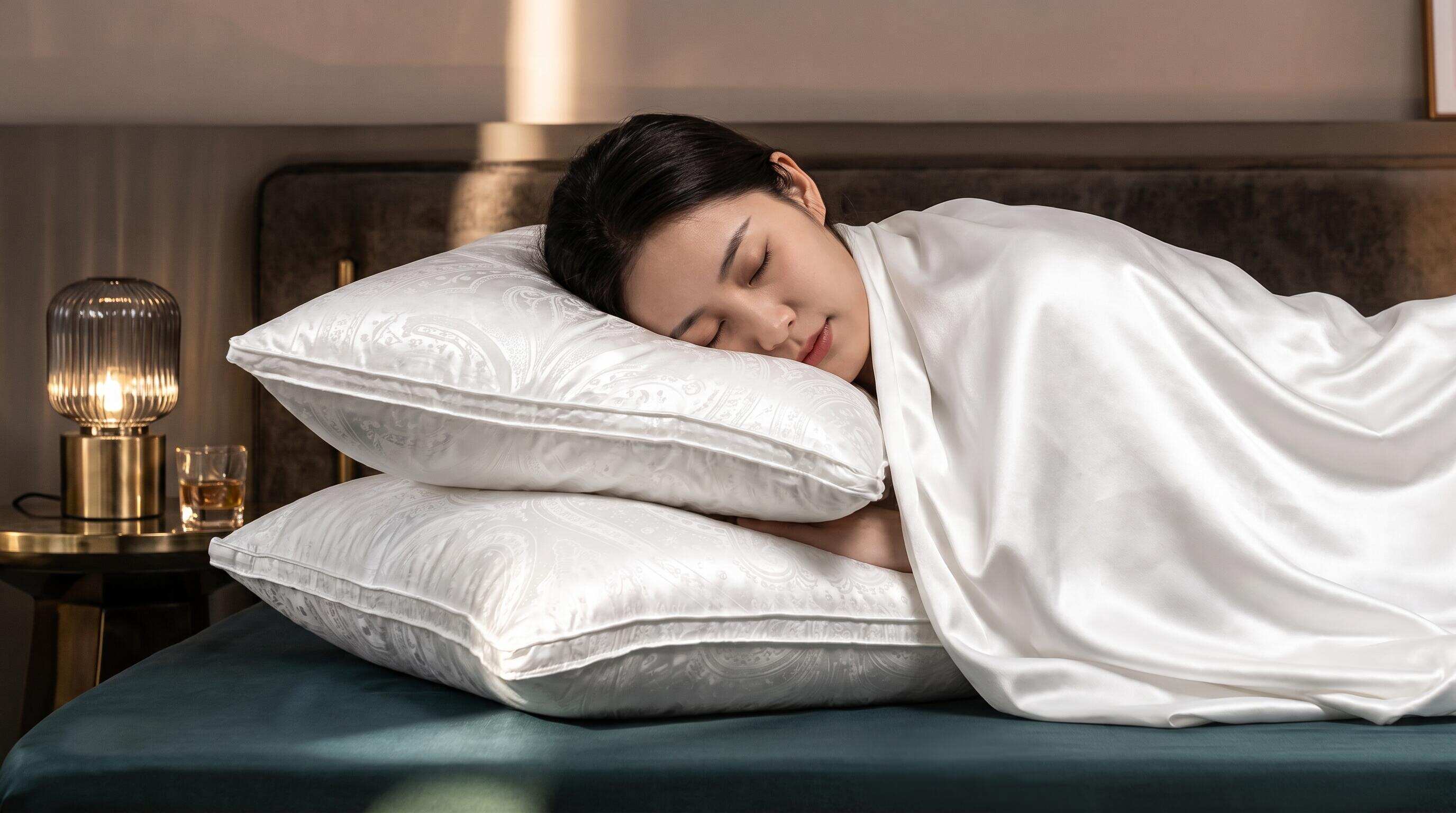
ALT: Sleeper resting comfortably on ice-silk cooling pillowcase, demonstrating heat-wicking fabric for warm-weather sleep
Frequently Asked Questions FAQ
Q1: How is ice-silk fabric different from regular polyester?
Ice-silk fabric and standard polyester both use synthetic fibers, but the similarity ends there. Ice-silk is engineered specifically for thermal conductivity and moisture management — the fiber geometry, yarn construction, and often the surface finishing are all optimized to pull heat away from the body and transport moisture outward. Regular polyester is designed for general durability and wrinkle resistance, and typically traps heat rather than dissipating it. The practical difference in sleep comfort is significant, especially in warm or humid environments.
Q2: Is ice-silk fabric safe for people with sensitive skin?
Ice-silk fabric is generally well-tolerated by people with sensitive skin, primarily because of its smooth, low-friction surface that minimizes mechanical irritation during sleep movement. However, some sleepers with synthetic fiber sensitivities or chemical sensitivities may react to finishing treatments used on lower-grade products. The safest approach is to look for products that disclose their full fiber composition and finishing chemistry, avoid options with unspecified coatings, and choose reputable manufacturers who meet recognized textile safety standards, such as those governed by OEKO-TEX certification criteria.
Q3: How long does the cooling effect of ice-silk last, and does it fade after washing?
The cooling effect of quality ice-silk is durable when the product is made from higher-grade nylon or well-constructed polyester blends. The cold-touch sensation is a structural property of the fiber and construction rather than a surface coating, so it persists through repeated washing. Lower-grade products that rely on chemical treatments for their cooling effect can degrade over time. The practical indicator: if a manufacturer cannot explain whether the cooling effect is structural or treatment-based, treat that as a signal to seek a more transparent product.
The Bottom Line
- Ice-silk is an engineered textile category — not a single fiber — designed to maximize thermal conductivity, moisture wicking, and surface smoothness for cooler sleep experiences.
- The cooling effect is real and grounded in material science, but quality varies enormously because "ice-silk" is an unregulated marketing term, not a standardized fiber classification.
- Fiber content transparency is the single most important thing to verify before buying: demand the actual composition (nylon %, polyester %, spandex %, etc.) rather than accepting a branded name as sufficient information.
- Ice-silk excels for hot sleepers, humid climates, and summer bedding, but it is not universally superior — natural silk, bamboo, and PCM fabrics each serve distinct sleep profiles better in specific circumstances.
- Durability and sustained performance depend on construction quality: higher nylon-content blends from manufacturers with transparent material disclosures consistently outperform cheaper alternatives over the long term.
The smartest next step is to match the fabric choice to your specific sleep problem — not to chase a trend. Identify whether your issue is contact warmth, active perspiration, ambient humidity, or a combination, and then select a product whose material composition is explicitly designed for that challenge.
Ready to upgrade your sleep from the inside out? SleepBetterMD takes the guesswork out of better rest — every pillow, sheet, and sleep accessory is hand-picked for material integrity and matched to your specific sleep concerns. Explore the full curated collection at the SleepBetterMD website and find exactly what your sleep has been missing.
Sources & Further Reading
- American Academy of Sleep Medicine. "Sleep and the Bedroom Environment: Temperature and Sleep Quality Guidance."
https://aasm.org - U.S. Federal Trade Commission. "Threading Your Way Through the Labeling Requirements Under the Textile and Wool Acts."
https://www.ftc.gov - OEKO-TEX Association. "OEKO-TEX STANDARD 100: Testing for Harmful Substances in Textiles."
https://www.oeko-tex.com - ASTM International. "Standard Test Methods for Thermal and Evaporative Resistance of Clothing Materials Using a Sweating Hot Plate."
https://www.astm.org - ISO (International Organization for Standardization). "Textiles — Test Methods for Nonwovens and Performance Fabrics."
https://www.iso.org
Note: Standards may be updated; please check the latest official documents or consult professional advisors.