


ALT: A clean bedroom with neatly stacked pillows arranged by material type for washing guide
Why Your Pillow's Wash Cycle Matters More Than You Think
Most people wash their pillowcases religiously but forget that the pillow inside — the thing your face actually rests on for six to eight hours every night — needs regular cleaning too. If you've ever woken up with a stuffy nose, noticed a yellowish tint on your pillow, or felt like your pillow just isn't as supportive as it used to be, an overdue wash is probably part of the story.
Here's the central finding: how often you should wash your pillow, and the method you use to do it, depends almost entirely on what it's made of. A one-size-fits-all approach can shorten a pillow's lifespan, strip its fill of its natural properties, or — worse — leave behind moisture that breeds mold and dust mites. This article breaks down the right cleaning schedule and safest washing method for every major pillow material, so you can protect both your investment and your sleep quality.
This topic deserves closer attention right now because the pillow category has never been more diverse. Shoppers today are choosing from memory foam, latex, down, buckwheat, kapok, and a growing range of hybrid fills — each with genuinely different care requirements. Yet most care labels remain vague, and cleaning guidance online is often generic to the point of being useless. As a curated sleep products retailer working closely with manufacturers across Asia, we see a consistent pattern: well-meaning sleepers ruin perfectly good pillows simply because they didn't know the right approach for their specific fill.
The State of Pillow Hygiene: What's Living in Your Pillow Right Now
Pillows are one of the most overlooked hygiene items in the bedroom, despite being among the most intimate. According to reporting by ABC News Australia, studies have found that pillows can harbor significant concentrations of dust mite allergens, fungal spores, and dead skin cells — all of which accumulate invisibly over months of use.
Dust mites are microscopic organisms that feed on shed human skin. They thrive in warm, humid environments — precisely the conditions created by a sleeping human's head. A pillow that hasn't been washed in a year can become a concentrated habitat for these creatures, which is a real concern for allergy-prone sleepers and anyone who wakes up congested or sneezing.
Beyond allergens, sweat and body oils soak through pillowcases and into pillow fill over time. This is what causes that familiar yellowing effect. It's not just cosmetic: the oils can degrade certain fill materials and create an environment where bacteria multiply. WebMD notes that washing pillows regularly — rather than just their covers — is an important step in maintaining a clean sleep environment.
The pillow market has also shifted considerably in recent years. Consumers are spending more on sleep products and expect them to last. But without proper care, even a high-quality pillow can deteriorate faster than it should. At SleepBetterMD, one of the patterns we consistently see is that customers who ask about pillow longevity often haven't washed their pillows in over a year — sometimes longer. The relationship between care habits and pillow performance is direct and measurable.
Understanding your pillow's material is also the gateway to making smarter purchasing decisions. If you're curious about how different fill types compare before you buy, this guide to finding the best pillow type for comfortable, healthy sleep is a useful starting point.
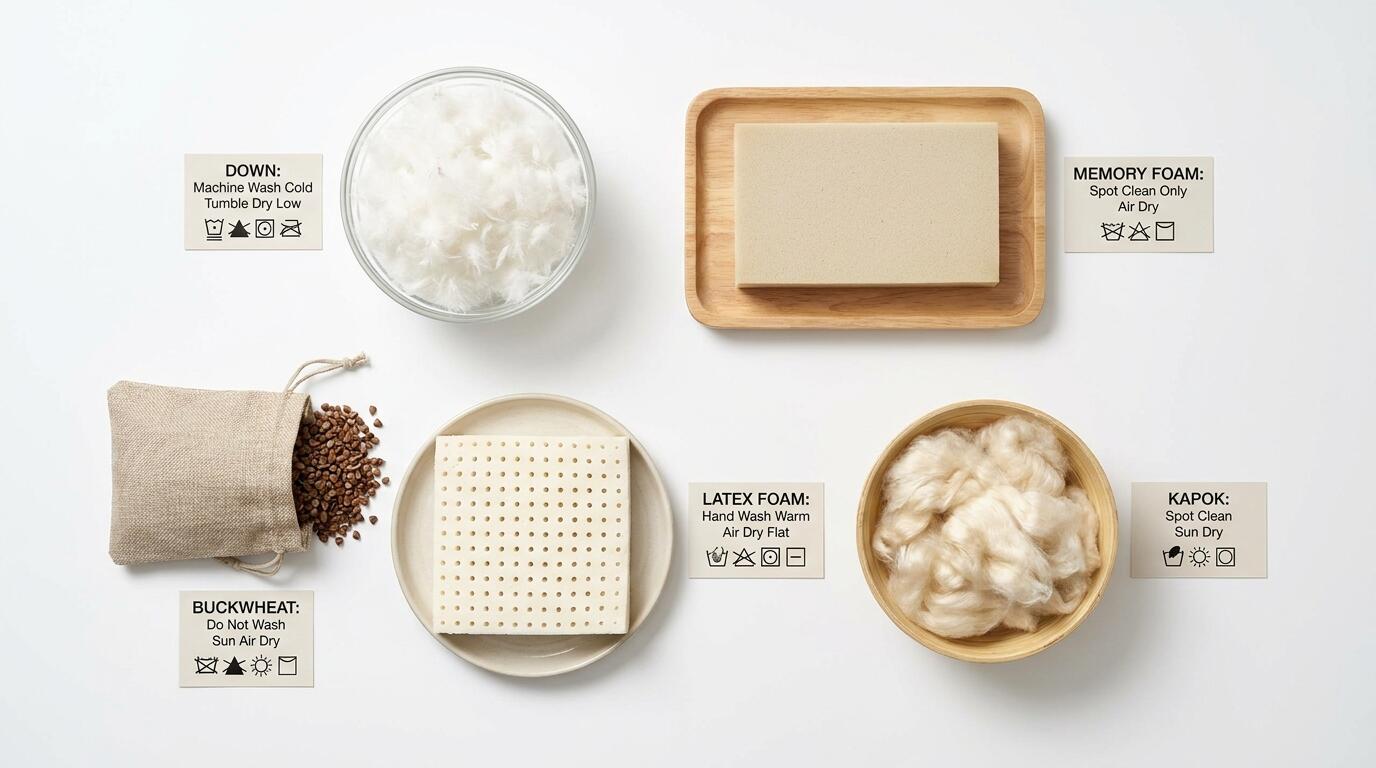
ALT: Various pillow fill materials including down, memory foam, and buckwheat beside care labels showing washing instructions for different pillow types
Breaking Down Pillow Care by Material: How Each Fill Type Behaves in the Wash
The safest cleaning method for a pillow is determined by its fill material. Here's what's actually happening inside each pillow type — and why that dictates how it should be cared for.
Down and Feather Pillows
Down fill — the soft under-plumage of ducks or geese — is a natural protein fiber that can handle machine washing, but only with care. Down clusters can clump together when wet and take a long time to dry thoroughly. If moisture remains trapped in the clusters, mold and mildew can develop inside the pillow even if the outer shell feels dry.
The recommended frequency for washing down and feather pillows is every three to six months. Use a gentle, low-sudsing detergent (or one specifically formulated for down) on a delicate cycle with warm water. The critical step is drying: tumble dry on low heat for at least two full cycles, adding clean tennis balls or dryer balls to help break up clumps and redistribute the fill. Never compress or wring a wet down pillow — this can permanently damage the clusters.
Memory Foam Pillows
Memory foam is a viscoelastic polyurethane material that conforms to the shape of your head and neck. It cannot be machine washed. The agitation of a washing machine will tear apart the foam's cellular structure, destroying the pillow's support properties entirely.
Memory foam pillows should be spot-cleaned with a mild detergent solution and a damp cloth. For a deeper refresh, you can hand-wash the foam gently in a bathtub with lukewarm water, but squeeze — never twist or wring — to remove water. Air drying is essential, and the pillow must be fully dry before use. This can take 24 hours or more. To keep memory foam pillows fresh between cleanings, use a quality pillow protector and wash it every two to four weeks. The pillow itself only needs deep cleaning every three to four months.
Latex Pillows
Latex pillows — made from either natural rubber latex or synthetic latex — share memory foam's vulnerability to machine agitation, but with an added complication: latex is also sensitive to heat. Machine washing can cause latex to crack or crumble. High heat drying will degrade the material rapidly.
Spot clean with a mild soap and damp cloth for routine maintenance. For a deeper clean, hand-wash gently in cool water and allow to air dry completely away from direct sunlight. Natural latex is inherently resistant to dust mites and mold, which means it doesn't need to be washed as frequently as other materials — roughly every four to six months, with spot cleaning in between.
Buckwheat Pillows
Buckwheat pillows are filled with the hard outer hulls of the buckwheat plant. This is where things get interesting: the hulls themselves should never be washed with water. Moisture causes them to soften, break down, and lose the firm, adjustable support that makes buckwheat pillows distinctive.
The correct approach is to remove the hulls and spread them outdoors in direct sunlight for a few hours — UV light naturally kills bacteria and refreshes the fill. The cotton or linen pillowcase or shell can be machine washed separately according to its care label. Do this every few months, or whenever the hulls start to feel musty or compressed.
Kapok Pillows
Kapok fill — a natural plant fiber harvested from the seed pods of the kapok tree — is lightweight, breathable, and naturally resistant to pests. It behaves similarly to down but is more delicate when wet. Kapok fiber can shift and clump unevenly if machine washed aggressively.
Hand-washing in cool water with a gentle detergent is the safest method, followed by thorough air drying in a well-ventilated space. Wash every three to six months. As with buckwheat, a good-quality pillow protector will significantly extend the time between full washes.
Polyester Fiberfill Pillows
Polyester fill is the most forgiving material when it comes to washing. These pillows are generally machine washable on a gentle or normal cycle with warm water and standard detergent. Wash two pillows at a time to keep the load balanced in the machine.
Dry on low to medium heat, checking regularly and fluffing the pillows by hand between cycles. Wash polyester pillows every three months, or more frequently if you sweat heavily at night or have allergies.
Evidence and Comparison: Matching Wash Frequency to Real-World Sleep Habits
The right washing schedule isn't only about material — it also depends on your individual circumstances. Someone who sweats heavily at night, shares a bed with a pet, or has respiratory allergies should wash their pillows more frequently than a cold sleeper in a clean environment.
According to Merry Maids, a household cleaning authority, most pillows benefit from washing every three to six months as a general guideline, though personal hygiene habits and health considerations can shift that recommendation significantly.
Here's a practical comparison of approaches:
| Washing Approach | Strengths | Trade-offs | Best Fit |
|---|---|---|---|
| Wash every 1-2 months | Maximizes hygiene, reduces allergen buildup | Can accelerate wear on natural fills; adds effort | Allergy sufferers, pet owners, hot sleepers |
| Wash every 3-4 months | Balances hygiene and pillow longevity | May be insufficient for heavy sweaters | Most general-use sleepers |
| Wash every 6 months | Gentle on materials, preserves fill integrity | Risk of allergen and bacteria accumulation | Sleepers using high-quality pillow protectors consistently |
| Spot clean only (foam/latex) | Correct method for foam and latex fills | Cannot address deep-seated odors or buildup | Memory foam, latex, and buckwheat pillow owners |
A pattern we consistently see in our work is that sleepers who invest in a quality pillow protector — a zippered, washable cover that goes between the pillow and pillowcase — can safely extend their washing intervals for the pillow itself while keeping their sleep environment genuinely clean. The protector catches sweat and oils before they reach the fill. This is especially valuable for materials like memory foam and latex that can't be frequently washed without damage.
When it comes to comparing sleep products by material, function, and long-term value, washing requirements are a practical factor that rarely gets discussed upfront — but should be. A pillow that's slightly more expensive but easier to launder may save you more over time than a budget option that degrades after a few wash cycles.
Where Pillow Care Is Heading — and What It Means for You
The broader shift toward material transparency in sleep products is changing how consumers think about pillow care. Shoppers are increasingly asking not just "what is this pillow made of?" but "how do I maintain it, and will it last?" This is a healthy evolution. Brands that clearly disclose their materials and provide honest care guidance are building trust in a category that has historically been opaque.
For consumers, the practical implication is straightforward: before you buy a pillow, understand its care requirements. A pillow you can't wash effectively — or that you'll consistently wash incorrectly — is a pillow that will underperform and need replacing sooner.
The rise of plant-based and natural fills like kapok, buckwheat, and natural latex also introduces care considerations that many sleepers aren't familiar with. These materials often have more specific requirements than conventional polyester or down, but they reward proper care with longevity and sustained comfort.
A few actionable takeaways grounded in everything above:
- Use a quality zippered pillow protector on every pillow you own. Wash the protector every two to four weeks and the pillow itself according to its material's schedule.
- Check your pillow's care label before washing — if a label is missing or unclear, default to the gentlest method appropriate for the fill (spot clean for foam and latex; hand-wash for delicate natural fills).
- Always dry pillows thoroughly before putting them back on the bed. Residual moisture inside fill material is the primary cause of mold and mildew in pillows.
- Replace pillows when they no longer spring back to shape, show permanent yellowing despite washing, or produce a persistent odor after cleaning.
Understanding pillow care is also deeply connected to understanding what your pillow is actually made of — which is why material transparency matters beyond just the initial purchase. If you're still evaluating your options, this guide on what material transparency means when buying sleep products explains why knowing your fill is the foundation of every care decision you'll make.
Frequently Asked Questions FAQ
Q1: How do I know if my pillow needs washing sooner than the recommended schedule?
Several signs suggest your pillow needs washing ahead of schedule: a noticeable odor that doesn't go away after airing out, visible yellow or brown staining on the pillow shell, waking up with increased congestion or skin irritation, or a pillow that feels heavier or lumpier than usual. Hot sleepers and anyone who doesn't regularly use a pillow protector should consider shortening their wash interval regardless of visible signs.
Q2: Is it safe to dry-clean a down or feather pillow instead of machine washing it?
Dry cleaning is generally not recommended for down or feather pillows. The chemical solvents used in dry cleaning can strip the natural oils from down clusters, making the fill brittle and less effective at trapping air — which is exactly what gives down its insulating and lofting properties. Machine washing with a gentle, low-sudsing detergent and proper drying technique is the safer and more effective method for most down pillows. Always check your pillow's specific care label first.
Q3: How long does a pillow typically last before it should be replaced entirely?
Pillow lifespan varies by material and care habits. Polyester fill pillows generally last one to two years with regular washing. Down and feather pillows, if properly cared for, can last five to ten years or more. Memory foam and latex pillows typically fall somewhere in between, often lasting three to five years depending on density and use. A simple test: fold the pillow in half — if it doesn't spring back to its original shape, it's likely time to replace it.
Wrapping Up
Three things stand out from everything covered here. First, washing frequency is material-dependent — there is no universal schedule that works for every pillow, and applying the wrong method can damage fill faster than time alone would. Second, a quality pillow protector is the single most effective tool for extending the time between full washes, regardless of what your pillow is filled with. Third, drying thoroughly is as important as washing correctly — trapped moisture is the primary threat to pillow hygiene and longevity.
The next practical steps are simple: identify what your current pillows are filled with, match that material to the correct washing method described above, and set a reminder in your calendar for the next recommended wash date. If your pillow is overdue, this weekend is a good time to start.
If you're also in the market for a new pillow — one with clear material disclosure so you always know exactly what you're caring for — that's a search worth doing with the right information in hand.
Ready to wake up feeling truly rested? SleepBetterMD takes the guesswork out of better sleep — every pillow, sheet, and sleep accessory is hand-picked from trusted Asian manufacturers and presented with full material transparency, so you know exactly what you're sleeping on. Explore curated solutions matched to your specific sleep needs at SleepBetterMD and find your path to deeper, more restorative nights.
References & Further Reading
- ABC News Australia. "How often should you wash your pillow?"
https://www.abc.net.au/news/2022-05-17/how-often-should-you-clean-pillows/101066124 - WebMD. "How to Clean Your Pillows"
https://www.webmd.com/a-to-z-guides/how-to-clean-your-pillows - Merry Maids. "Cleaning Bed Pillows"
https://merrymaids.com/blog/cleaning-bed-pillows
Note: Standards and guidance may be updated; please check the latest official documents or consult professional advisors for the most current recommendations.