

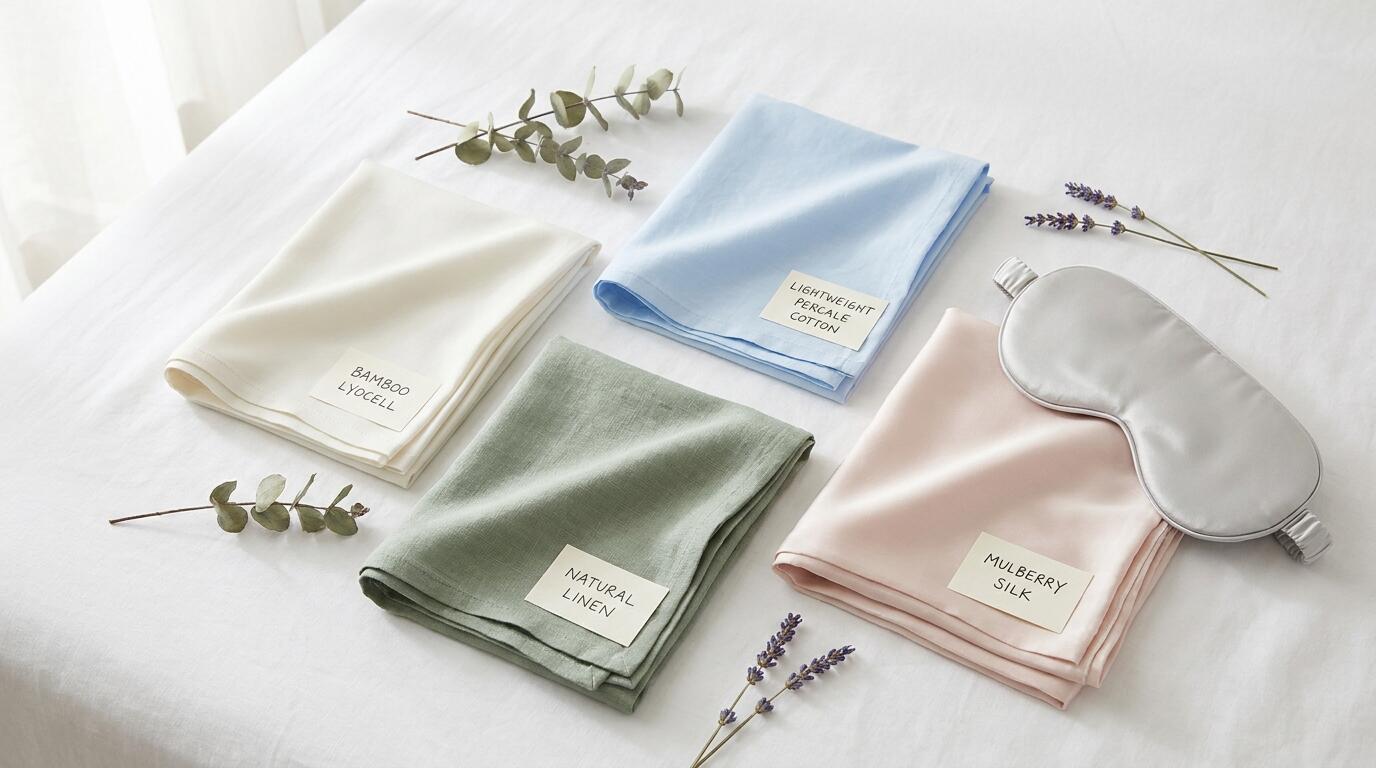
ALT: Best sleepwear fabrics for hot sleepers — breathable cotton, bamboo, linen and silk pajamas this season
What to Wear to Bed When You Run Warm: The Best Sleepwear Fabrics for Hot Sleepers
You've switched off the fan, kicked off the duvet, and still wake up at 2 a.m. drenched and restless. If that sounds familiar, you're not alone. A pattern we consistently see at SleepBetterMD is that hot sleepers often invest in cooling mattresses or pillows before realizing their sleepwear is quietly undoing all that effort — trapping heat right at the skin surface where temperature regulation matters most.
This guide cuts through the noise by ranking the best sleepwear fabrics for hot sleepers this season, explaining what makes each material work (or not), and helping you match the right fabric to your specific sleep situation. Whether you're dealing with naturally high body heat, seasonal humidity, hormonal night sweats, or simply a warm climate, there's a fabric here that will make a genuine difference — and knowing what to look for means you spend wisely the first time.
How we selected these fabrics: Every material on this list was evaluated through the lens of three practical questions: Does it wick moisture efficiently? Does it allow air to circulate freely around the body? And does it stay comfortable across a full night's sleep rather than just the first hour? We also factored in durability and value, because the most breathable fabric in the world isn't worth much if it pills after five washes.
The Best Sleepwear Fabrics for Hot Sleepers, Ranked
Bamboo-Derived Fabric (Viscose or Lyocell from Bamboo)
Bamboo-derived fabric — sold as bamboo viscose, bamboo rayon, or TENCEL-branded lyocell from bamboo — is consistently one of the top-performing sleepwear materials for people who run warm. The fiber is processed from bamboo pulp into a soft, lightweight yarn that wicks moisture away from the skin and releases it into the air faster than conventional cotton. The result is a dry-feel fabric that actively manages sweat rather than simply absorbing it.
In our work curating sleepwear from Asian manufacturers, bamboo-derived fabrics stand out for their silk-like drape and surface softness, which makes them genuinely pleasant on sensitive or irritated skin. They also regulate temperature across a wider comfort range than many synthetic alternatives, making them effective in both humid summers and mild transitional seasons. As noted in product and fabric research published by sleep and textile communities, bamboo-derived fibers score particularly well on moisture transport — a key metric for hot sleepers.
Best for: Hot sleepers in humid climates, anyone prone to night sweats, and those with sensitive skin who need a non-scratchy option.
Watch out: The term "bamboo" on a label can mean anything from eco-conscious lyocell to heavily chemically processed viscose. Always check for specific fiber processing disclosures — this is precisely where material transparency matters.
100% Linen
Linen is a natural fiber made from the flax plant, and it is one of the oldest and most breathable textiles used in sleepwear. Its hollow fiber structure allows air to move through the fabric freely, creating a natural ventilation effect that synthetic fabrics struggle to replicate. Linen also absorbs moisture — up to 20% of its own weight — without feeling damp, then releases it quickly, so you don't end up lying in a clammy layer.
What sets linen apart for hot sleepers is its combination of airflow and thermal conductivity: it actually draws heat away from the body rather than simply being passive. It softens noticeably with every wash, becoming more comfortable over time, which gives it strong long-term value. For those who prioritize natural, minimally processed materials, linen's straightforward production story is also a transparency win.
Best for: Hot sleepers in dry or moderately humid environments, sustainability-minded shoppers, and anyone who wants a fabric that improves with age rather than degrading quickly.
Watch out: Fresh linen can feel stiff and slightly rough, which some sleepers find uncomfortable until the fabric has been laundered several times. If tactile sensitivity is a concern, pre-washed linen options are worth the modest price premium.
Lightweight Cotton (Percale Weave or Voile)
Not all cotton is created equal for hot sleepers. Heavyweight jersey or flannel cotton traps heat; lightweight cotton woven in a percale or voile structure breathes very differently. Percale — a plain, one-over-one-under weave with a thread count typically in a range that prioritizes airflow over density — feels crisp and cool against the skin and dries quickly after contact with moisture.
Cotton's key advantage is universal familiarity and washability. It's hypoallergenic, widely available, and holds up well to frequent laundering — an important practical consideration for anyone who washes sleepwear several times a week due to night sweats. It also tends to sit at a lower price point than bamboo or linen alternatives, making it a strong entry point for hot sleepers who are just starting to optimize their sleep environment. For a broader look at how fabric choices intersect with temperature regulation across your whole sleep setup, SleepBetterMD's guide on bedding materials for hot, cold, and combination sleepers offers a useful companion framework.
Best for: Budget-conscious shoppers, those new to cooling sleepwear, and anyone who prioritizes easy-care fabrics they can launder frequently.
Watch out: Generic "100% cotton" labels don't tell you about weave structure, which is what actually determines breathability. Look specifically for percale, voile, or gauze construction — not sateen, which has a denser surface that retains more warmth.
Silk (Mulberry Silk, Momme Weight Matters)
Silk is a natural protein fiber produced by silkworms, and mulberry silk — derived from silkworms fed exclusively on mulberry leaves — is the premium benchmark for sleepwear. Silk's temperature-regulating properties come from its protein structure, which responds to body heat dynamically: it feels cool when you're warm and provides a light layer of insulation when temperatures drop, making it genuinely season-spanning.
For hot sleepers, silk works best in low-to-moderate humidity environments. It wicks moisture, but less aggressively than bamboo or linen, so in very humid conditions it may feel clinging after a prolonged sweat episode. The payoff is an unmatched surface feel — smooth, frictionless, and gentle on skin and hair. Momme weight (a measure of silk density) is the key quality indicator: lighter momme weights offer more breathability, while heavier ones increase durability and opacity. According to fabric specialists and textile reference resources, sleepwear typically falls in a range that balances wearability with airflow, though specific values vary by garment design.
Best for: Hot sleepers in drier climates or air-conditioned rooms, those managing skin conditions or hair sensitivity, and anyone looking for a durable investment piece.
Watch out: Silk requires careful laundering — harsh detergents and machine spin cycles degrade the fiber quickly. Factor in the ongoing care cost when evaluating overall value.
Modal
Modal is a semi-synthetic fiber derived from beech tree pulp, processed in a way that produces a fabric softer than standard cotton with notably better moisture management. It sits in a useful middle ground: more durable and easier to care for than silk, more moisture-wicking than standard cotton, and with a softer hand feel than linen.
Hot sleepers who move around frequently during the night tend to respond well to modal's stretch and recovery — it moves with the body without bunching or riding up, which interrupts sleep less than stiffer fabrics. Modal also resists pilling and color fading reliably, which supports long-term value. As a semi-synthetic, it benefits from transparent labeling about its production process — something worth asking about when shopping.
Best for: Active sleepers who move a lot, those who want easy-care softness without the delicate handling of silk, and shoppers looking for a durable mid-range investment.
Watch out: Modal's breathability is good but not exceptional in extreme heat or high humidity. In very hot, sticky conditions, it may feel warmer than linen or bamboo options.
Tencel Lyocell (Generic Lyocell)
TENCEL Lyocell is a branded lyocell fiber produced by Lenzing AG using a closed-loop solvent process that recovers and recycles the vast majority of processing chemicals — a genuine environmental credential rather than greenwashing. As a fabric for hot sleepers, lyocell excels at moisture absorption and release: it can absorb significantly more moisture than cotton on a fiber-weight basis while maintaining a dry surface feel.
Lyocell drapes smoothly and has a subtle sheen that reads as elevated without requiring the care complexity of silk. It's increasingly sourced from Asian textile manufacturers who meet Lenzing's licensing standards, which means transparency-minded shoppers can trace the material's credentials back to a verifiable standard. For readers who want a deeper framework on evaluating these kinds of material claims, this guide on what material transparency means when buying sleep products is worth reading alongside a label.
Best for: Eco-conscious hot sleepers, those who want verifiable sustainability credentials, and anyone who wants silk-adjacent softness with simpler care.
Watch out: Generic "lyocell" without the TENCEL branding uses the same fiber type but may lack the certified closed-loop production story. If environmental credentials matter to you, look for the Lenzing certification specifically.
Microfiber (Performance Polyester)
Microfiber — ultra-fine polyester or polyamide filaments woven into a lightweight fabric — is worth including on this list not as an ideal choice but as a pragmatic one that's widely available and often misunderstood. Performance-grade microfiber, particularly fabrics engineered for athletic use, does move moisture away from the skin rapidly through capillary wicking action. In the right construction, it can outperform basic cotton for moisture transport.
The limitation is thermal: polyester doesn't breathe in the same way natural or semi-synthetic fibers do. In warm rooms without air conditioning, performance microfiber can feel warm and slightly clammy despite its wicking properties. It works best in climate-controlled environments or for short-duration temperature spikes. On a cost-per-wear basis, high-quality performance microfiber is very competitive — it washes easily, dries quickly, and holds its shape reliably.
Best for: Budget-first shoppers, those sleeping in air-conditioned rooms, and people who need quick-drying sleepwear due to heavy night sweating.
Watch out: Not all microfiber is created equal. Mass-market microfiber pajamas often prioritize softness over genuine moisture management — look for fabrics with a documented wicking finish or athletic-grade construction, not just a smooth hand feel.
Eucalyptus Lyocell (TENCEL from Eucalyptus)
Eucalyptus-derived lyocell — also produced under the TENCEL brand using eucalyptus pulp — offers a cooling experience that many hot sleepers describe as immediately noticeable. The fiber's cross-section is smooth, which means it reflects light softly and lies flat against the skin without trapping a warm air layer. Its moisture management is among the best of any commonly available sleepwear fabric, and its production story — eucalyptus grows quickly without irrigation or pesticides in many regions — gives it a clean environmental profile.
From a sourcing perspective, eucalyptus lyocell is now produced and finished by a growing number of Asian manufacturers who work to Lenzing's certified standards, making it increasingly accessible without the price premium that silk carries. In our experience curating sleepwear options, this fabric consistently earns positive feedback from readers who run particularly warm, especially those in coastal or tropical climates.
Best for: Very hot or heavy-sweating sleepers, those in tropical or coastal climates, and eco-conscious shoppers who want the best-in-class moisture management with a verifiable sustainability credential.
Watch out: Like all lyocell, eucalyptus TENCEL benefits from gentle laundering to maintain its smooth surface and longevity. Aggressive spin cycles and high-heat drying reduce its lifespan.
Quick Comparison at a Glance
The table below summarizes how each fabric performs against the key criteria hot sleepers care about most — breathability, moisture management, care ease, and value for money.
| Fabric | Best For | Key Strength | Limitation |
|---|---|---|---|
| Bamboo-Derived (Viscose/Lyocell) | Humid climates, sensitive skin | Moisture wicking + softness | Label transparency varies widely |
| 100% Linen | Dry or warm climates, natural fiber fans | Superior airflow + durability | Stiff feel until broken in |
| Lightweight Cotton (Percale/Voile) | Budget shoppers, easy-care priority | Washability + accessibility | Weave structure determines performance |
| Mulberry Silk | Dry/AC environments, skin/hair sensitivity | Dynamic temperature regulation | High care demands, premium cost |
| Modal | Active sleepers, easy-care softness | Stretch, durability, softness | Less effective in extreme humidity |
| TENCEL Lyocell (Eucalyptus) | Heavy sweaters, eco-conscious buyers | Best-in-class moisture absorption | Requires gentle laundering |
| TENCEL Lyocell (Generic Bamboo) | Sustainability-focused buyers | Certified closed-loop production | Verify Lenzing certification specifically |
| Performance Microfiber | AC rooms, budget shoppers | Quick-drying, cost-effective | Limited breathability without AC |
How to Choose the Right Sleepwear Fabric for Your Situation
The best sleepwear fabric for a hot sleeper in Hong Kong's August humidity is not the same as the best choice for someone in an air-conditioned apartment in Toronto. Matching the fabric to your specific context — not just the "hottest sleeper" category — is where most shoppers go wrong.
Start with your sleep environment. If you sleep in a naturally warm room without climate control, prioritize fabrics with active airflow: linen and eucalyptus lyocell consistently outperform in high-ambient-heat conditions. If you sleep in an air-conditioned room but run warm by nature, silk and modal are genuinely comfortable choices — the environmental control handles the bulk of the temperature work, and you need surface comfort rather than maximum ventilation.
Factor in moisture level. Heavy night sweats — whether from a naturally high metabolic rate, hormonal fluctuations, or a temporary illness — call for fabrics with strong moisture transport: bamboo lyocell, eucalyptus TENCEL, or performance microfiber in AC environments. Lighter warmth without much sweating is well-served by linen or percale cotton.
Think about total cost of ownership. A silk set may carry a higher upfront price, but properly cared-for silk lasts for years. Conversely, a well-chosen percale cotton option at a lower price point might deliver better value if you wash sleepwear frequently. This is the kind of material and long-term value comparison that pays off when you're deciding between two options that both look good on the surface.
A common misconception to clear up: many hot sleepers assume that lighter color = cooler sleepwear. Color affects radiant heat absorption in direct sunlight, but in a dark bedroom, what matters entirely is the fabric's structure and fiber type. A dark bamboo lyocell set will outperform a white polyester one every time.
For those who want tailored, step-by-step guidance on building out their cooling pajama wardrobe for the warmer months, our guide on how to choose cooling pajamas for hot sleepers this summer walks through fit, construction, and seasonal considerations in detail.
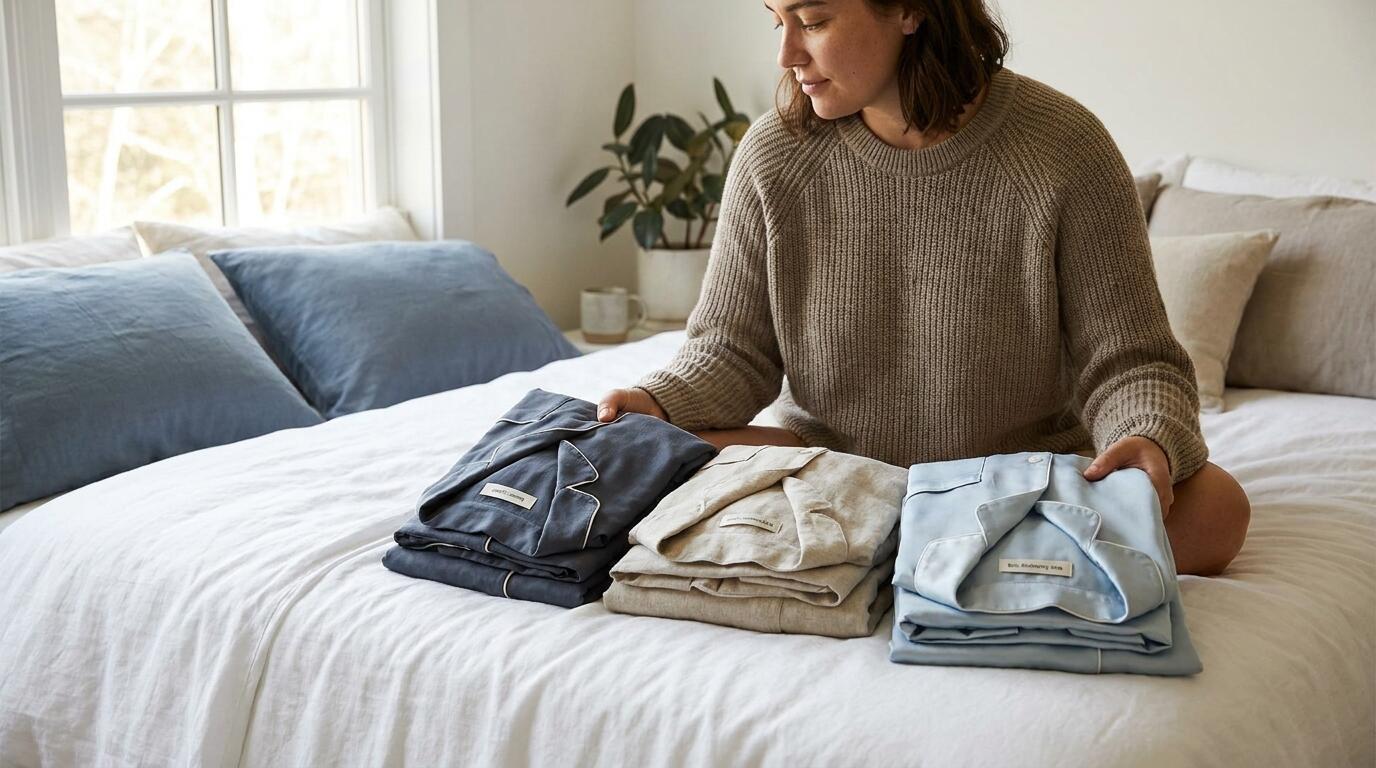
ALT: Hot sleeper choosing between bamboo, linen, and silk sleepwear fabrics for better temperature regulation and cooler nights
Frequently Asked Questions FAQ
Q1: How do I know if a sleepwear fabric is genuinely cooling or just marketed that way?
Look for two things: the fiber type and the weave or construction. Fiber type tells you what the raw material can do — bamboo lyocell and linen have documented moisture-transport properties, while generic polyester does not. Construction tells you whether those properties are activated — a tightly woven cotton will hold heat regardless of the fiber's potential. According to fabric and sleep product specialists, the combination of fiber and structure is what determines real-world performance. Labels that claim "cooling" without specifying fiber and construction are marketing, not specification.
Q2: Is bamboo sleepwear really better than cotton for hot sleepers?
Bamboo-derived fabrics — specifically lyocell or viscose processed from bamboo pulp — generally outperform standard cotton for moisture wicking and surface softness. However, the comparison depends on cotton construction: percale or voile-woven cotton can compete closely with bamboo viscose in airflow, while bamboo lyocell typically edges ahead on moisture management. As noted in resources on pajama materials, the processing method used to create bamboo fabric significantly affects the final product's performance and environmental profile — which is why fiber-processing transparency matters when you're comparing options on paper.
Q3: How often should I replace sleepwear fabrics used for night sweats?
Frequency of replacement depends on the fabric and care routine rather than a fixed time period. Natural fibers like linen and silk degrade noticeably when washed in harsh conditions — degraded fibers trap heat rather than releasing it. A practical indicator: if your sleepwear no longer feels cool at first contact, or if fabric pilling or structural breakdown is visible, it has lost much of its thermal function. Investing in two or three quality sets and rotating them — rather than wearing one set daily — meaningfully extends the life of each garment.
Final Thoughts
Choosing the right sleepwear fabric is one of the most direct, cost-effective interventions a hot sleeper can make — and it's often overlooked in favor of more expensive equipment upgrades.
Key Takeaways:
- Fabric structure matters as much as fiber type: percale cotton and linen outperform dense-weave fabrics of the same material every time.
- Eucalyptus lyocell and bamboo-derived lyocell lead on moisture management for heavy sweaters; linen leads on pure airflow in warm, dry conditions.
- Silk offers unmatched comfort in climate-controlled environments but requires more care investment to maintain its performance.
- Material transparency — knowing exactly what you're wearing and how it was processed — is the foundation of a confident, informed purchase.
- Total cost of ownership, including care requirements and durability, should factor into any fabric comparison alongside the upfront price.
The next step is simple: identify your primary sleep challenge (excess heat, humidity, night sweats, or skin sensitivity) and match it to the fabric profile that addresses it directly. That focused approach consistently delivers better outcomes than shopping by brand name or price point alone.
Ready to put this into practice? Explore SleepBetterMD's curated sleepwear collection, where every product is sourced from trusted Asian manufacturers with full material transparency — so you know exactly what you're sleeping in before you add it to your cart.
Sources & Further Reading
- Simple Opulence. "Why Hot Sleepers Need Cooling Pajamas: Best Fabrics & Styles to Stay Cool".
https://www.simpleopulence.com/blogs/blog-posts/why-hot-sleepers-need-cooling-pajamas-best-fabrics-styles-to-stay-cool - Zed Sleep. "Best Pajamas for Hot Flashes: Tested Options and Fabric Guidance".
https://zedsleep.co/blogs/sleep-hub/best-pajamas-for-hot-flashes - SilkSilky. "Best Pajama Materials for Every Sleeper".
https://silksilky.com/blogs/silksilky-living/best-pajama-materials
Note: Standards and product formulations may be updated; please check the latest official documents or consult professional advisors for current guidance.