

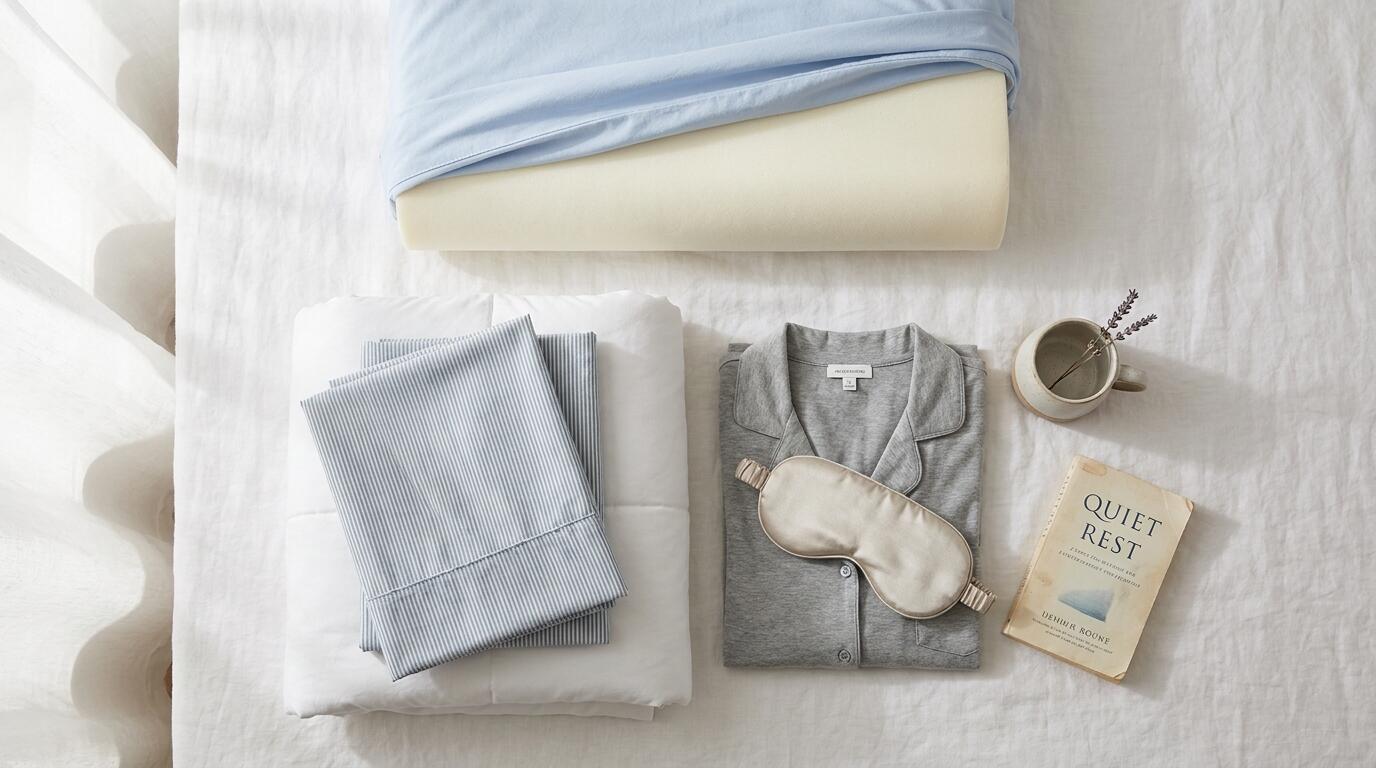
ALT: Budget sleep setup under $100 with pillow, bedding, and sleepwear for quiet nights
Build a Quiet Night Sleep Setup for Under $100 This Quarter
A restful night's sleep doesn't have to come with a luxury price tag — and this guide is here to prove it. In our work helping sleep-conscious shoppers navigate the overwhelming world of bedding and sleep products, a pattern we consistently see is that people overspend on things that don't move the needle while underinvesting in the fundamentals that actually matter. A well-built budget sleep setup — one that addresses real discomforts like noise sensitivity, temperature regulation, and pressure on joints — is absolutely achievable within a $100 budget. This step-by-step guide is designed for urban professionals, new parents, and anyone ready to stop tolerating poor sleep and start solving it systematically, without breaking the bank.
Before You Start: What to Know Before Building Your Budget Sleep Setup
Before you spend a single dollar, you need a clear-eyed picture of what's actually disrupting your sleep. Building a quiet night sleep setup on a budget works best when every purchase solves a specific, identified problem — not when you're buying things because they look appealing or come with a discount tag.
The most common pitfall we see is spending the entire budget on one premium item while neglecting other equally important factors. Your sleep environment is a system. A perfect pillow won't save you if your sleepwear traps heat, your room lets in street noise, or your sheets irritate your skin. This guide distributes your $100 across the elements that make the biggest combined difference.
Here's what you'll want to assess before you shop:
Your primary sleep complaint. Is it that you wake up hot? That light or sound disturbs you? That you have neck or shoulder pain in the morning? Knowing your top one or two complaints lets you weight your budget appropriately.
Your current sleep environment. Take stock of what you already own that's working — you don't need to replace what isn't broken. If your sheets are fine but your pillow is flat and misshapen, that's where your money goes first.
Your material sensitivities. If you have sensitive skin or allergies, material transparency matters enormously. At SleepBetterMD, we've seen shoppers waste money on products that caused irritation simply because no one disclosed what was inside — which is exactly why understanding what material transparency means when buying sleep products should be a prerequisite step, not an afterthought.
Checklist before starting:
- Identify your top one or two sleep discomforts (heat, noise, pain, light, texture sensitivity)
- Audit your current sleep setup — note what's already working and what isn't
- Set a firm $100 spending ceiling and rough allocation per category
- Research material contents of any product before purchasing, not after
- Allow yourself one to two weeks of consistent use before evaluating whether a new product is working
Step-by-Step: How to Build a Quiet, Comfortable Sleep Setup for $100
Step 1: Prioritize Your Spending by Sleep Problem, Not by Product Category
The first and most important step is deciding where your money will have the greatest impact — and this decision must be based on your specific sleep problem, not on which product category seems most obvious.
A shopper who runs hot at night will benefit most from breathable sleepwear and a temperature-regulating pillowcase. A light and noise-sensitive sleeper needs to allocate toward a quality sleep mask and perhaps a white noise solution before worrying about a new pillow. Someone dealing with morning neck stiffness should put their largest share toward a supportive pillow.
Write down your top complaint, then assign a rough dollar amount to that category first, and fill in the remaining items from the rest of the budget.
Tip: A useful rule of thumb: put roughly half your budget toward whichever single category addresses your primary sleep complaint, then distribute the remainder across two or three supporting items. Resist the urge to buy five things for $20 each — you'll end up with five mediocre items rather than one genuinely good one.
Step 2: Choose a Pillow That Matches Your Sleep Position and Needs
A well-chosen pillow is, for most people, the highest-impact single purchase in a budget sleep setup. The right pillow — one that supports your head and neck in proper alignment for your sleeping position — can meaningfully reduce morning stiffness and help you stay in deeper sleep longer.
When shopping on a budget, focus on two factors above all else: fill material and loft (height). Side sleepers generally need a higher, firmer loft to fill the gap between shoulder and head. Back sleepers do better with medium loft and gentle contouring. Stomach sleepers need low, soft loft to avoid neck strain. As a starting point, understanding what type of pillow is best for comfortable, healthy sleep can help you narrow your options before you ever open a product page.
Budget-friendly pillow materials to consider include memory foam offcuts (good pressure relief, though can retain heat), shredded latex blends (responsive, cooler than solid foam), and hollow-fiber polyester (affordable, hypoallergenic options available). Always check what's inside — a pillow with no material disclosure is a red flag, not a bargain.
Tip: Don't assume a higher price means a better pillow for you specifically. The fit to your sleeping position matters far more than the price tag.
Step 3: Invest in Breathable Sleepwear if Temperature Is a Factor
Sleepwear is chronically underestimated as a sleep variable. Your body temperature naturally drops as you fall asleep, and what you wear to bed either supports or fights that process. Wearing dense, heat-trapping fabrics — or nothing at all in a cold room — can fragment sleep without you ever identifying the cause.
For hot sleepers, look for sleepwear made from moisture-wicking, breathable fabrics. Bamboo-derived fabrics, lightweight cotton (particularly combed or percale-weave), and certain technical fabrics designed for temperature management are worth prioritizing. For cold sleepers or those in cool climates, brushed cotton and thermal knits provide warmth without bulk.
Within a tight budget, prioritize the sleepwear piece that covers the most body surface — typically a long-sleeved top or lightweight sleep pants — rather than buying a full matching set you can't fully afford.
Tip: A single high-quality, breathable sleep top in the right fabric will do more for your thermal comfort than a full matching set in the wrong one. Know your material first.
Step 4: Add a Pillowcase That Works With Your Skin and Temperature
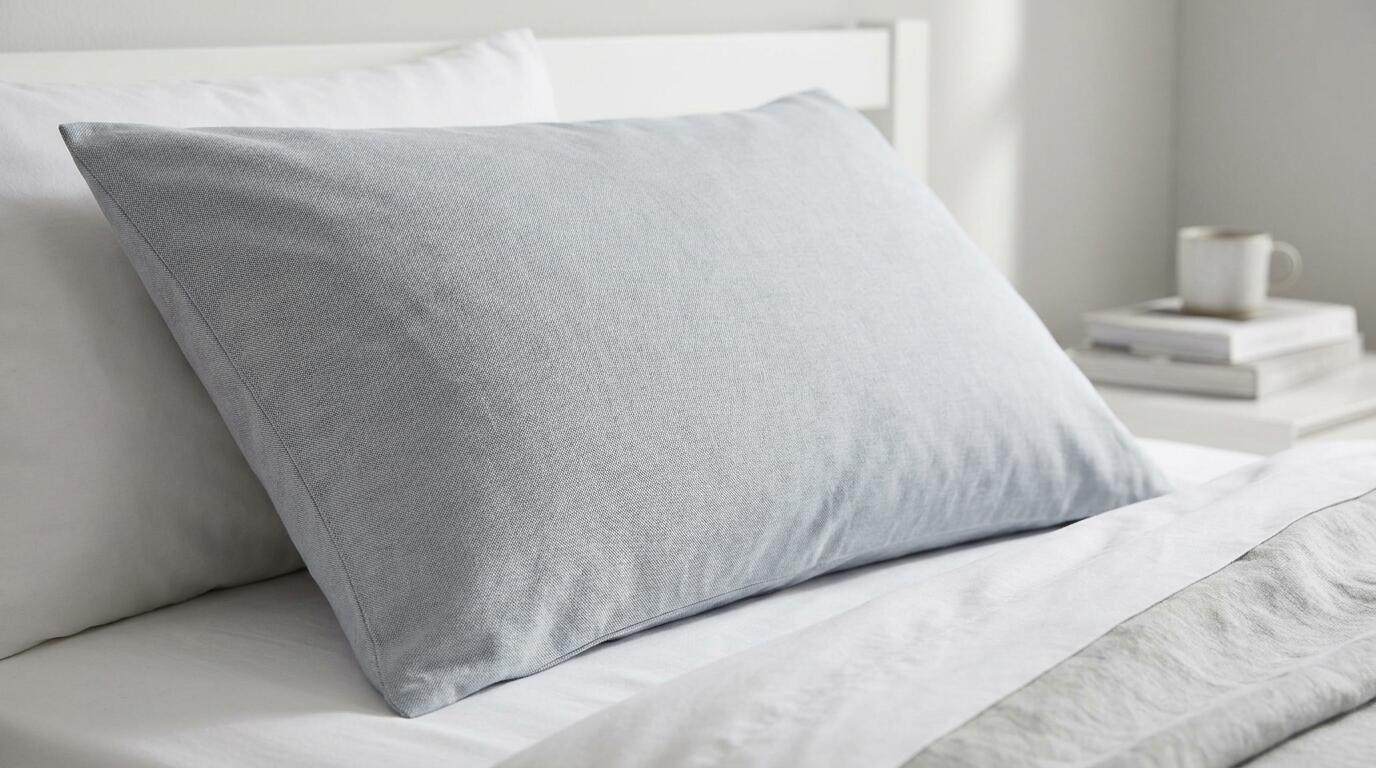
ALT: Soft breathable pillowcase on a well-supported pillow for a budget-friendly quiet night sleep setup
Your pillowcase is in contact with your face and skin for the entire night. It affects moisture retention, skin friction, temperature at the head, and — for those with skin sensitivity — potential irritation. It's also one of the most affordable upgrades available in a budget sleep setup.
Percale cotton pillowcases offer a cool, crisp feel and are generally very affordable. Satin-weave polyester is widely available at low price points and reduces friction for hair and skin, though it's worth noting that not all "satin" pillowcases are created equal — some retain more heat than others. Bamboo-blend pillowcases tend to be slightly pricier but deliver genuine temperature regulation and softness.
One area where budget shoppers often go wrong: buying pillowcases bundled with sheet sets that contain fabrics they didn't evaluate individually. Always check the pillowcase material separately, especially if skin sensitivity is a concern.
Tip: If you've already invested in a good pillow, a quality pillowcase is one of the highest value-per-dollar upgrades left in your budget. Don't skip it to save a few dollars.
Step 5: Address Light and Noise with Low-Cost Accessories
For light-sensitive and noise-sensitive sleepers — a group that, in our experience, is far larger than people realize — the right accessories can be transformative. The good news is these are typically the most budget-friendly items in a sleep setup.
A well-fitting sleep mask, made from a soft, skin-friendly material with a contoured shape that doesn't press directly on the eyelids, can block ambient light effectively. Look for adjustable straps and materials that won't cause forehead or nose bridge irritation over a full night.
For noise, a white noise app (often free) or a low-cost white noise machine can mask disruptive sounds like street traffic, neighbors, or a partner's movements. If you prefer something even simpler, foam earplugs are inexpensive and effective, though they require some adjustment period and aren't suitable for everyone. According to the National Sleep Foundation, environmental noise is one of the most commonly reported disruptors of sleep quality, making noise management a high-priority item for anyone building a sleep setup from scratch.
Tip: Don't underestimate how much a blackout curtain liner — often available at a very low price — can amplify the effect of a sleep mask. Together, they address light intrusion far more completely than either does alone.
Step 6: Select One or Two Targeted Add-Ons Based on Your Remaining Budget
Once you've addressed your primary sleep complaint (Step 1) and covered the core items (pillow, sleepwear, pillowcase, light/noise accessories), you'll likely have a small remaining budget. This is where targeted, problem-specific add-ons come in.
Options worth considering in this final allocation:
- A lavender or eucalyptus linen spray, which some sleepers find genuinely useful for relaxation — though individual responses vary and this is a "nice to have," not a core item
- A weighted eye pillow, which combines the benefits of a sleep mask with gentle pressure — helpful for tension headaches or high-stress sleepers
- A kneeor body pillow for side sleepers who experience hip or lower back discomfort
- A basic white noise machine upgrade if a free app isn't meeting your needs
The key discipline here is resisting the pull to fill this remaining budget with things that look appealing rather than things that solve a documented problem. Per the SleepBetterMD guide on prioritizing sleep products on a limited budget, shopping by problem rather than by product category is what separates a sleep setup that transforms your nights from one that simply adds clutter to your bedroom.
Tip: If you genuinely don't have a secondary complaint beyond your primary one, bank the remaining dollars or carry them forward to next quarter. One great purchase beats two impulse buys.
Step 7: Evaluate, Adjust, and Plan the Next Quarter
Building an effective sleep setup on a budget is an iterative process, not a one-time purchase event. After giving your new items two full weeks of consistent use, do a quick honest audit: Has your primary sleep complaint improved? Are there new or remaining issues you want to address?
According to research published by the American Academy of Sleep Medicine, consistent sleep habits and environment quality are closely linked — meaning the investment in your sleep setup compounds over time as your body adjusts to better conditions. One quarter's budget is a meaningful start; the next quarter can refine and deepen the setup.
Keep notes — even just a few sentences — on what changed and what didn't. This kind of structured reflection is how you turn a $100 experiment into a genuinely optimized personal sleep system. Many of our customers who start with one targeted, well-researched purchase report that the confidence and clarity it gives them makes their next purchase far more precise and effective.
Tip: Treat your sleep setup like you would a fitness routine — it takes consistent iteration, not a single perfect purchase.
Common Mistakes and Troubleshooting Your Budget Sleep Setup
| Symptom | Likely Cause | How to Fix |
|---|---|---|
| Still waking up hot after buying breathable sleepwear | Bedding or mattress topper is trapping heat; sleepwear material not genuinely breathable | Check sheet and duvet materials; verify fabric content claims on sleepwear — look for certifications like OEKO-TEX Standard 100 |
| Pillow feels right in the store but causes neck pain at home | Loft or firmness doesn't match your actual sleeping position | Reassess sleep position; consider an adjustable-fill pillow that lets you add or remove fill |
| Sleep mask causes headache or leaves marks | Band tension too tight; mask pressing on eyes | Try a contoured mask with a wider, softer band; adjust strap before sleeping |
| White noise helps but isn't fully masking sound | Volume or frequency range not matched to the type of noise you're blocking | Experiment with different sound profiles (brown noise, rain, fan) — different sounds mask different frequency ranges |
| Bought multiple items but sleep quality hasn't improved | Purchased by category preference rather than by problem | Step back to Step 1: re-identify your primary complaint and reallocate around it |
| New pillowcase causing skin irritation | Undisclosed synthetic blends or chemical finishes in the fabric | Return and choose a product with full material disclosure; look for certified organic or tested fabrics |
Pro Tips for Going Further with Your Budget Sleep Setup
Layer your light and noise solutions, not just your bedding. Most guides focus on bedding materials, but the fastest wins for light and noise-sensitive sleepers come from the environment itself — blackout curtains, a door gap draft stopper, and a white noise source can be assembled for a small fraction of your total budget and often outperform an expensive pillow upgrade for people whose primary issue is environmental.
Buy from brands that disclose materials upfront. This sounds obvious, but the sleep product market is full of vague claims — "ultra-soft," "premium quality," "natural feel" — that disclose nothing about actual materials. A brand that tells you exactly what's inside its pillow or pajamas is one you can trust and return to confidently. At SleepBetterMD, radical material transparency is a core principle — not a marketing phrase — because in our experience, informed shoppers make better sleep decisions and have far fewer returns and disappointments.
Separate your "sleep environment" budget from your "sleep product" budget. Blackout liners, white noise machines, and room temperature management (a fan, a heating pad) are environmental interventions, not sleep products — but they belong in your overall sleep setup thinking. Consider allocating a small portion of your $100 specifically to environmental improvements rather than assuming all of it goes toward products you put on or under your body.
One common misconception to clear up: many shoppers believe that higher thread count in sheets always means better sleep. Thread count is only one variable — and in some cases, inflated counts are achieved through multi-ply yarn tricks that actually make sheets feel heavier and less breathable. The fiber content and weave structure (percale vs. sateen, for example) matter far more than the number on the label.
Give every new item a full two-week trial before judging it. Bodies take time to adjust to new sleep surfaces and materials. A pillow that feels unfamiliar on night one may feel natural by night ten. The exception is clear discomfort — pain, irritation, or markedly worse sleep — in which case you should stop using the item and reassess.
People Also Ask
How can I build a sleep setup on a $100 budget without wasting money?
Building a quiet night sleep setup on $100 requires prioritizing your purchases by your specific sleep problem — not by what looks good or what's popular. Start by identifying your top one or two sleep complaints (heat, noise, pain, light), then allocate the largest portion of your budget to the item that addresses that complaint most directly. Avoid buying five affordable items across every category; instead, choose two or three genuinely well-made products that solve documented problems. For structured guidance on comparing options, SleepBetterMD's guide to comparing sleep products by material, function, and long-term value is a useful starting point.
Is it worth spending money on sleepwear as part of a sleep setup?
Sleepwear is a genuinely impactful investment for sleepers whose core problem is temperature regulation. Your body naturally lowers its core temperature during sleep onset, and what you wear either supports or interferes with that process. Breathable, moisture-wicking fabrics like lightweight cotton or bamboo-derived materials actively assist thermoregulation, while dense synthetic blends can trap heat and fragment sleep. For hot sleepers especially, the right sleepwear can make a measurable difference — often at a lower price point than an upgraded mattress or pillow.
How long does it take to see results from a new budget sleep setup?
Most sleepers need at least one to two weeks of consistent use before accurately evaluating a new sleep product. Bodies adapt to new surfaces, materials, and sleep environments gradually, and first-night impressions are often unreliable. If you've made two or three targeted changes at once, wait the full two weeks before adding or swapping anything else — changing too many variables simultaneously makes it impossible to know what's helping. According to the American Academy of Sleep Medicine, consistent sleep environment conditions support more reliable sleep quality over time, which means patience is part of the strategy.
Summary
Building a quiet, comfortable sleep setup for under $100 is not about finding the cheapest possible versions of standard sleep products — it's about making deliberate, problem-first purchasing decisions that address your actual sleep discomforts with the most effective tools available at your budget level.
Key Takeaways:
- Identify your primary sleep complaint first — heat, noise, pain, or light — and allocate the majority of your budget toward solving that specific problem.
- A pillow, pillowcase, and sleepwear combination forms the core of most budget sleep setups; light and noise accessories round out the system.
- Material transparency matters even at budget price points — always check what's actually inside or on any product before purchasing.
- Give every new item two full weeks of consistent use before evaluating whether it's working.
- Treat your sleep setup as an iterative system: one quarter's investment is a strong foundation, and the next quarter can refine it further.
Your next step is simple: write down your single biggest sleep complaint today, then use that as your filter for every purchase decision that follows. The discipline of shopping by problem — not by price, aesthetic, or trend — is what turns a $100 budget into a genuinely meaningful improvement in your nightly rest.
Ready to transform the way you sleep? Browse the curated collection of pillows, sleepwear, bedding, and sleep accessories at SleepBetterMD — every product is hand-picked from 20+ trusted Asian manufacturers with full material transparency, so you always know exactly what you're sleeping on.
References & Further Reading
- National Sleep Foundation. "Sleep Environment and Sleep Quality."
https://www.sleepfoundation.org - American Academy of Sleep Medicine. "Sleep Health and Environment Guidelines."
https://www.aasm.org - OEKO-TEX Association. "OEKO-TEX Standard 100: Testing for Harmful Substances in Textiles."
https://www.oeko-tex.com - U.S. National Institutes of Health — National Center on Sleep Disorders Research. "Sleep Disorders and Sleep Deprivation: Research and Public Health."
https://www.nih.gov - World Sleep Society. "World Sleep Day and Sleep Health Resources."
https://www.worldsleepsociety.org
Note: Standards and guidelines may be updated; please check the latest official documents or consult professional advisors.